Understanding Your Hair Pattern
Straight, wavy, curly, coily — and what pattern doesn't tell you.
Last reviewed by the Hairavie editorial team on September 1, 2026.
On this page
What pattern actually describes
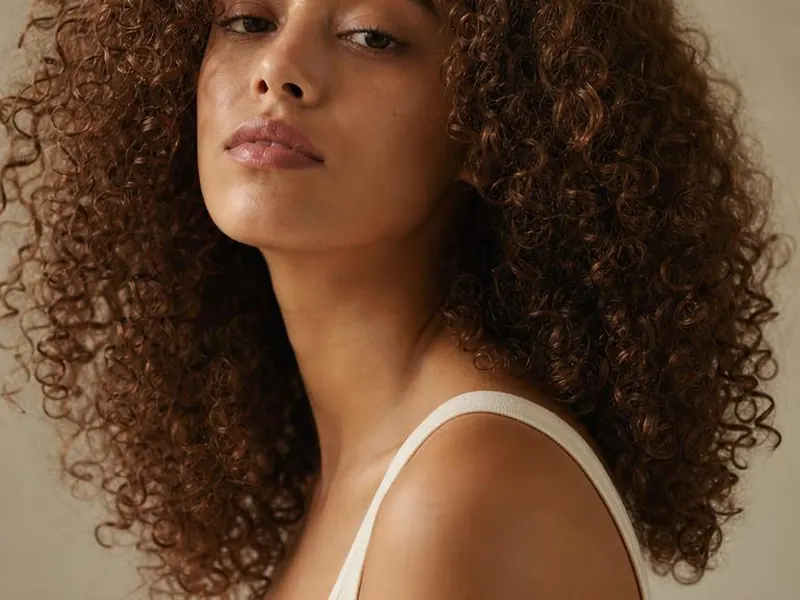
Curl pattern reflects the shape of the follicle and the way the fibre grows out of it. Researchers have described it with measurable geometry — curve diameter, number of waves, twists along the fibre — rather than a single letter-and-number label.
Most people have more than one pattern on their head. Hairavie records up to three, because a crown that behaves differently from the nape is normal, not a problem.
Why pattern matters at all
- Curved fibres distribute natural scalp oils along the length less evenly than straight fibres.
- Bends and twists are points where mechanical stress concentrates during combing and styling.
- Pattern strongly shapes what a style looks like and how it is built.
What pattern does not determine
Two people with the same pattern can want completely different products. Pattern says nothing about strand diameter, density, porosity behaviour, chemical history or how much heat and manipulation your routine involves.
Hairavie deliberately never builds a product rule out of pattern alone. It softly de-prioritises curl-shaping products when they clearly don't fit an intent, and that's it.
If a rule starts with "all curly hair needs…", treat it as marketing rather than science.
How Hairavie knows this
Hairavie cites peer-reviewed research, scientific reviews, reference textbooks, dermatology organisations and government health resources. Beauty blogs are never used as scientific authority.
- Peer-reviewed studyLoussouarn, G. et al. (2007). Worldwide diversity of hair curliness: a new method of assessment. International Journal of Dermatology
- Reference textbookRobbins, C. R. (2012). Chemical and Physical Behavior of Human Hair (5th ed.). Springer
Keep reading
Hair Growth 101
How hair is made, the phases every follicle moves through, and why shedding and breakage are not the same thing.
6 min readFine, Medium & Coarse Strands
Strand thickness is the width of a single fibre. It is not the same as how much hair you have.
5 min readHair Density Explained
Density counts fibres per area of scalp. It shapes volume and product quantity — not fibre behaviour.
4 min readHairavie provides cosmetic hair-care education only. It does not diagnose or treat medical or scalp conditions. If symptoms persist or you're concerned about hair loss or scalp health, consult a qualified healthcare professional.