Fine, Medium & Coarse Strands
Strand diameter, and why formula weight can feel so different.
Last reviewed by the Hairavie editorial team on September 1, 2026.
On this page
Diameter, measured on one strand
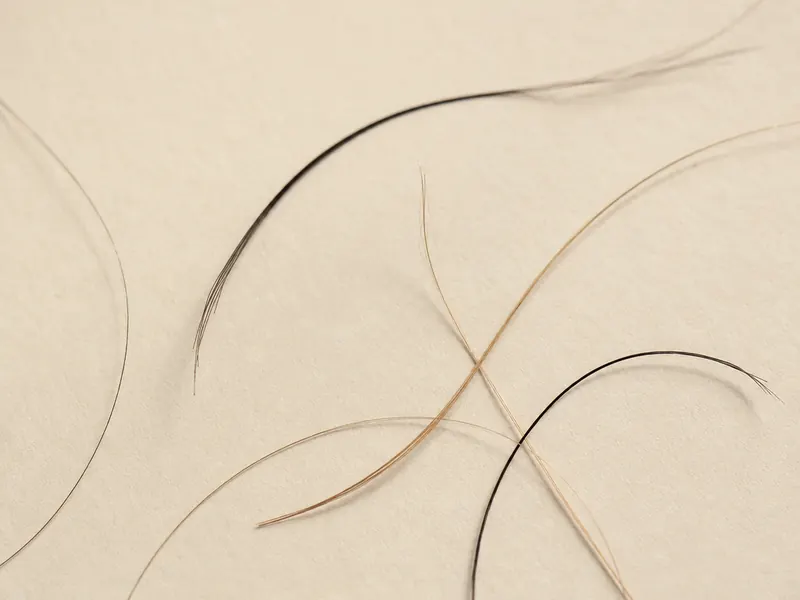
Human hair fibres vary widely in cross-section. A fine fibre and a coarse fibre can sit side by side on the same head, which is why a single label is an average rather than a fact about every strand.
A practical check: roll one clean strand between your fingers. Barely detectable tends to read as fine; clearly wiry or thick tends to read as coarse.
Thickness is not density
| Trait | Answers | Changed by |
|---|---|---|
| Strand thickness | How wide is one fibre? | Largely genetic; can shift over time |
| Density | How many fibres per area of scalp? | Genetics, shedding, life stage |
Plenty of people have many fine strands, or fewer coarse ones. Neither combination is better.
Why the same cream can feel opposite
Deposition is roughly proportional to surface area. A given amount of product spread over finer fibres tends to sit as a heavier proportional load, which is often experienced as limpness.
Coarser fibres are stiffer and can carry more deposition before the style visibly collapses. That is a tendency, not a rule — amount used, product distribution and total formula all matter more than any single trait.
How Hairavie knows this
Hairavie cites peer-reviewed research, scientific reviews, reference textbooks, dermatology organisations and government health resources. Beauty blogs are never used as scientific authority.
- Reference textbookRobbins, C. R. (2012). Chemical and Physical Behavior of Human Hair (5th ed.). Springer
- Scientific reviewGavazzoni Dias, M. F. R. (2015). Hair cosmetics: an overview. International Journal of Trichology
Keep reading
Hair Growth 101
How hair is made, the phases every follicle moves through, and why shedding and breakage are not the same thing.
6 min readUnderstanding Your Hair Pattern
Pattern describes the shape your hair takes. It is a useful description, not a complete profile of how your hair behaves.
5 min readHair Density Explained
Density counts fibres per area of scalp. It shapes volume and product quantity — not fibre behaviour.
4 min readHairavie provides cosmetic hair-care education only. It does not diagnose or treat medical or scalp conditions. If symptoms persist or you're concerned about hair loss or scalp health, consult a qualified healthcare professional.