Hair Damage 101
Mechanical, thermal, chemical — and what "repair" really means.
Last reviewed by the Hairavie editorial team on September 1, 2026.
On this page
Mechanical
Combing, brushing, towel friction, tight styling and everyday abrasion wear the cuticle and can snap fibres, especially where they are already weakened or tangled.
Thermal
High heat can alter the fibre's protein structure and water content. Damage generally increases with temperature, contact time and how wet the hair is when heat is applied.
Chemical
Colouring, lightening, relaxing and perming work by restructuring the fibre. Effects are cumulative, and overlapping services compound them.
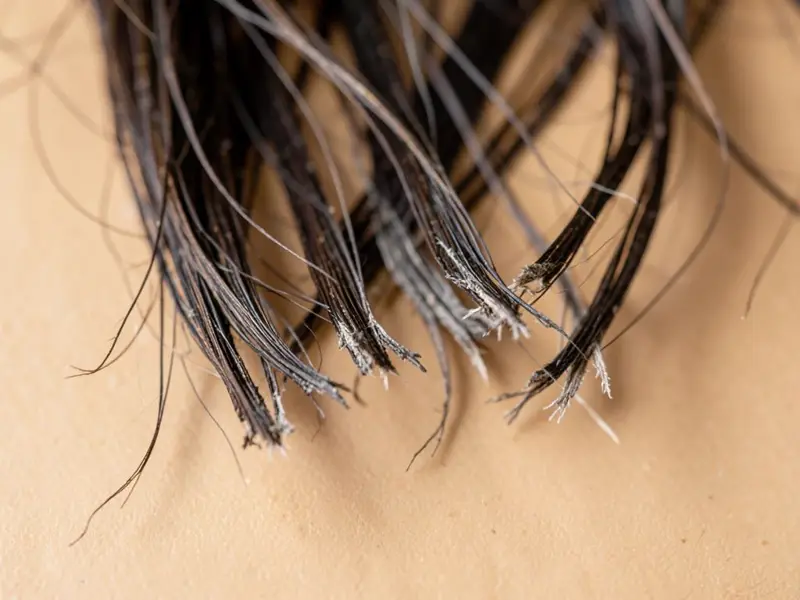
Weathering accumulates from tip to root
The ends of long hair are years older than the roots and have been through every wash, style and season since. Uneven behaviour along one strand is expected.
Cosmetic management vs repair
Because the strand is not living tissue, it cannot biologically heal. Conditioners, bond-focused treatments and protein-containing products can improve smoothness, reduce friction and temporarily improve how a damaged fibre behaves.
That is genuinely valuable — it just isn't regeneration. Hairavie describes these effects as cosmetic and temporary rather than curative.
How Hairavie knows this
Hairavie cites peer-reviewed research, scientific reviews, reference textbooks, dermatology organisations and government health resources. Beauty blogs are never used as scientific authority.
- Reference textbookRobbins, C. R. (2012). Chemical and Physical Behavior of Human Hair (5th ed.). Springer
- Peer-reviewed studyBhushan, B. (2008). Nanoscale characterization of human hair and hair conditioners. Progress in Materials Science
- Peer-reviewed studyKoyama, T. et al. (2013). Understanding the role of mechanical damage in hair fibre breakage. Journal of Cosmetic Science
Keep reading
Hair Growth 101
How hair is made, the phases every follicle moves through, and why shedding and breakage are not the same thing.
6 min readUnderstanding Your Hair Pattern
Pattern describes the shape your hair takes. It is a useful description, not a complete profile of how your hair behaves.
5 min readFine, Medium & Coarse Strands
Strand thickness is the width of a single fibre. It is not the same as how much hair you have.
5 min readHairavie provides cosmetic hair-care education only. It does not diagnose or treat medical or scalp conditions. If symptoms persist or you're concerned about hair loss or scalp health, consult a qualified healthcare professional.