Scalp Oils: Helpful or Overhyped?
What oiling the scalp can and cannot be expected to do.
Last reviewed by the Hairavie editorial team on September 1, 2026.
On this page
Why people oil their scalps
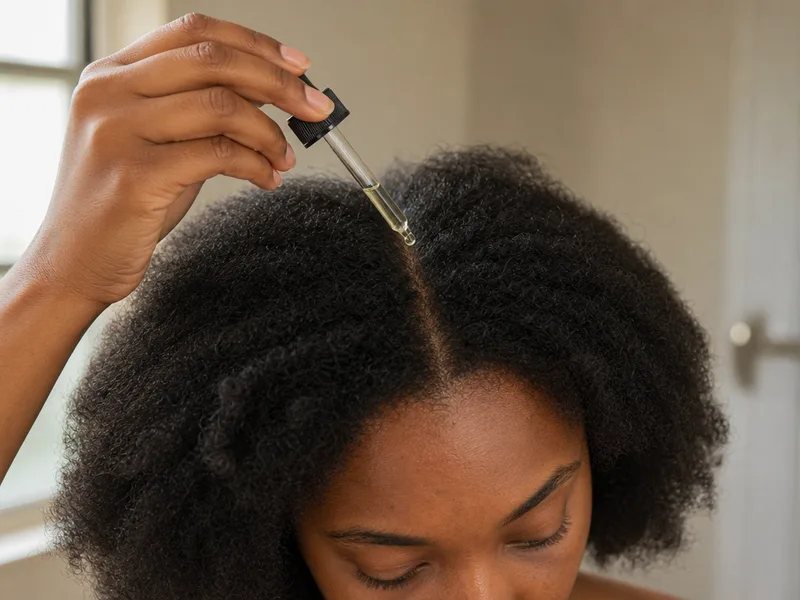
It's a long-standing practice in many hair-care traditions, often as part of a pre-wash ritual. People commonly report comfort, reduced tightness and easier detangling afterwards.
What the evidence supports
Cosmetic effects on the fibre — lubrication, reduced friction, in some cases reduced protein loss during washing — have reasonable support.
The claim that applying oil to the scalp increases the rate at which follicles produce hair does not have that support. Treat it as unestablished.
Reasonable cautions
- Heavy oils left on for long periods can contribute to buildup for some people.
- If your scalp is already flaky, itchy or inflamed, oiling can make things worse rather than better.
- Dilute essential oils; they are potent and can irritate.
- Stop anything that stings, burns or produces a rash.
How Hairavie knows this
Hairavie cites peer-reviewed research, scientific reviews, reference textbooks, dermatology organisations and government health resources. Beauty blogs are never used as scientific authority.
- Peer-reviewed studyRele, A. S. & Mohile, R. B. (2003). Effect of mineral oil, sunflower oil and coconut oil on prevention of hair damage. Journal of Cosmetic Science
- Scientific reviewGavazzoni Dias, M. F. R. (2015). Hair cosmetics: an overview. International Journal of Trichology
- Dermatology organisationHair care and hair loss guidance for the public. American Academy of Dermatology. View source
Keep reading
Healthy Scalp Basics
The scalp is skin. General skin principles apply — and symptoms are described here, never diagnosed.
5 min readDry Scalp vs Dandruff
General education on how these are usually described — not a way to identify what you have.
5 min readHow Often Should You Wash Your Hair?
Wash frequency follows scalp behaviour, product use and lifestyle — a set of variables, not a rule.
5 min readHairavie provides cosmetic hair-care education only. It does not diagnose or treat medical or scalp conditions. If symptoms persist or you're concerned about hair loss or scalp health, consult a qualified healthcare professional.