Myth: The Float Test Measures Porosity
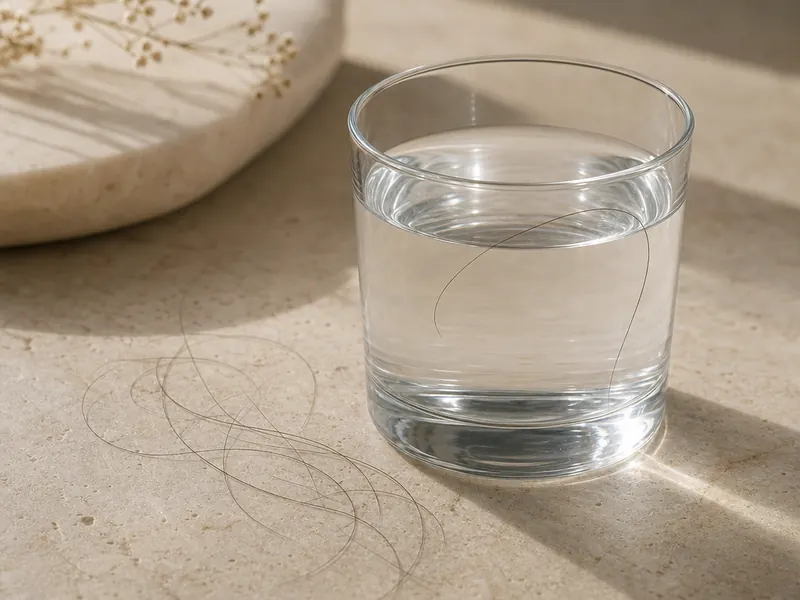
A strand in a glass of water is not a measurement.
Last reviewed by the Hairavie editorial team on September 1, 2026.
On this page
Why it doesn't work
- Product residue on the strand changes how it behaves in water
- Surface tension can hold a strand up regardless of its condition
- Strand thickness and length affect the result
- Water temperature and how the strand was dropped both matter
- One strand doesn't represent your whole head
What's more informative
How your hair behaves is a better signal than a glass of water: how quickly it wets in the shower, how long it takes to dry, and whether products absorb or sit on the surface.
Hairavie estimates porosity from behaviour and always shows a confidence level rather than asserting certainty.
How Hairavie knows this
Hairavie cites peer-reviewed research, scientific reviews, reference textbooks, dermatology organisations and government health resources. Beauty blogs are never used as scientific authority.
- Reference textbookRobbins, C. R. (2012). Chemical and Physical Behavior of Human Hair (5th ed.). Springer
- Scientific reviewGavazzoni Dias, M. F. R. (2015). Hair cosmetics: an overview. International Journal of Trichology
Keep reading
Myth: Trimming Makes Hair Grow Faster
Trimming can't change growth rate — but it can change how much length you keep.
3 min readMyth: Biotin Grows Everyone's Hair
Biotin deficiency can affect hair. Correcting a deficiency you don't have is a different proposition.
4 min readMyth: Protective Styles Always Protect
A style is protective when it reduces manipulation without adding tension. Both halves matter.
4 min readHairavie provides cosmetic hair-care education only. It does not diagnose or treat medical or scalp conditions. If symptoms persist or you're concerned about hair loss or scalp health, consult a qualified healthcare professional.