Myth: Natural Ingredients Are Always Safer
Origin isn't a safety category.
Last reviewed by the Hairavie editorial team on September 1, 2026.
On this page
The verdict
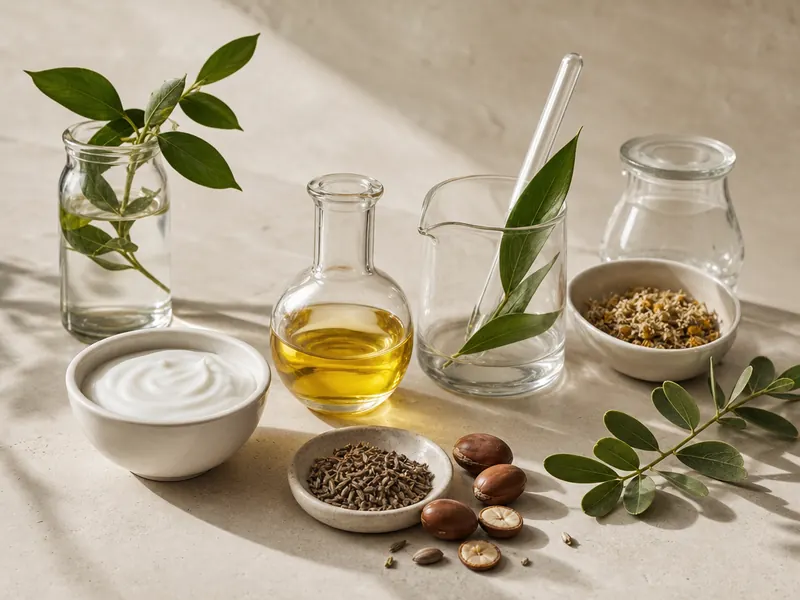
Safety depends on the specific substance, its concentration, how it's formulated and how it's used — not on whether it came from a plant.
Plant extracts and essential oils are among the more common causes of allergic contact reactions in cosmetics. Meanwhile many synthetics have long, well-characterised safety records.
A note on DIY
Kitchen ingredients aren't automatically safe on hair or scalp. Undiluted lemon juice, undiluted essential oils and very acidic or alkaline mixtures can irritate skin or damage the fibre.
How Hairavie knows this
Hairavie cites peer-reviewed research, scientific reviews, reference textbooks, dermatology organisations and government health resources. Beauty blogs are never used as scientific authority.
- Scientific reviewGavazzoni Dias, M. F. R. (2015). Hair cosmetics: an overview. International Journal of Trichology
- Regulatory guidanceCosmetics labeling guide — ingredient declaration. U.S. Food and Drug Administration. View source
- Dermatology organisationHair care and hair loss guidance for the public. American Academy of Dermatology. View source
Keep reading
Myth: Trimming Makes Hair Grow Faster
Trimming can't change growth rate — but it can change how much length you keep.
3 min readMyth: Biotin Grows Everyone's Hair
Biotin deficiency can affect hair. Correcting a deficiency you don't have is a different proposition.
4 min readMyth: Protective Styles Always Protect
A style is protective when it reduces manipulation without adding tension. Both halves matter.
4 min readHairavie provides cosmetic hair-care education only. It does not diagnose or treat medical or scalp conditions. If symptoms persist or you're concerned about hair loss or scalp health, consult a qualified healthcare professional.