Silicones: Good, Bad, or Neither?
How they work, who they may benefit, and the common myths.
Last reviewed by the Hairavie editorial team on September 1, 2026.
On this page
What they're actually for
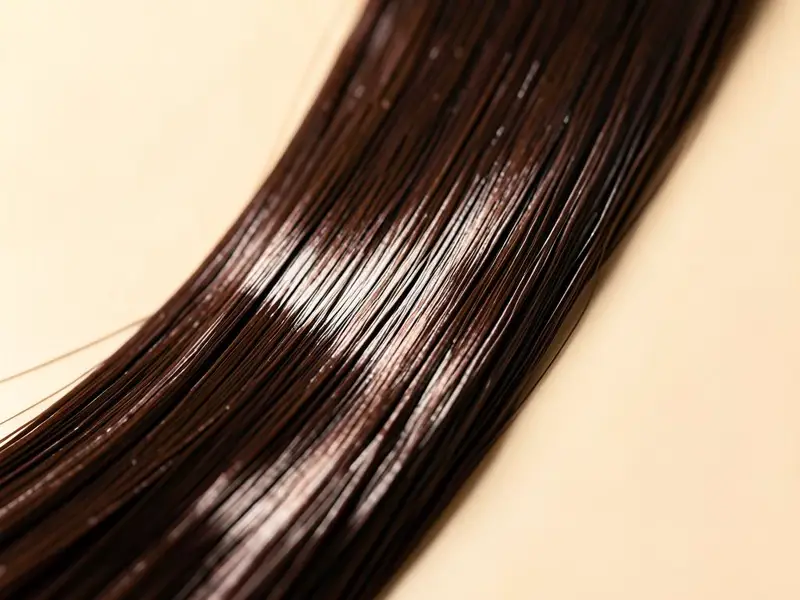
Silicones form a thin film on the fibre surface. That film can reduce friction during combing, improve shine, reduce frizz and provide some protection during heat styling.
Reduced combing friction is not a cosmetic nicety — mechanical force is one of the main routes to breakage.
"Silicone" is not one ingredient
- Volatile silicones evaporate after application and leave little behind.
- Water-soluble variants rinse readily with normal cleansing.
- Heavier, non-water-soluble types deposit more and need a more effective surfactant to remove.
The buildup question
Buildup happens when deposition outpaces cleansing. It's a relationship between the product, how much you use and how you wash — not a property of the ingredient alone.
Someone using a heavier silicone with a gentle co-wash routine may see buildup. The same product with periodic effective cleansing may not.
Why "bad for all hair" isn't responsible
A blanket verdict ignores the type of silicone, its concentration, the rest of the formula and the person's routine. Hairavie analyses formulas and describes trade-offs rather than publishing fear lists.
How Hairavie knows this
Hairavie cites peer-reviewed research, scientific reviews, reference textbooks, dermatology organisations and government health resources. Beauty blogs are never used as scientific authority.
- Scientific reviewGavazzoni Dias, M. F. R. (2015). Hair cosmetics: an overview. International Journal of Trichology
- Reference textbookRobbins, C. R. (2012). Chemical and Physical Behavior of Human Hair (5th ed.). Springer
- Peer-reviewed studyBhushan, B. (2008). Nanoscale characterization of human hair and hair conditioners. Progress in Materials Science
Keep reading
How to Read an Ingredient List
Ingredient lists are a genuinely useful window into a formula — and they are not the recipe.
6 min readOils for Your Hair Type
A practical starting-point guide that keeps strand thickness and porosity as two separate questions, because they are.
9 min readSulfates & Cleansing
Cleansing is a spectrum of surfactant strength. The label on the front tells you less than the system inside.
6 min readHairavie provides cosmetic hair-care education only. It does not diagnose or treat medical or scalp conditions. If symptoms persist or you're concerned about hair loss or scalp health, consult a qualified healthcare professional.